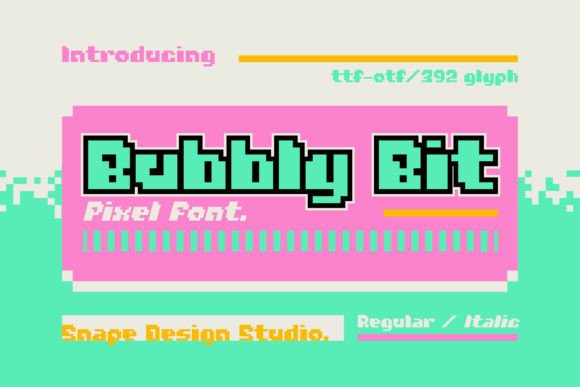
Bubbly Bit: Capturing Retro Charm in Your Modern Designs
There is a specific kind of nostalgia that hits you when you see pixelated block letters. It takes you back to the golden age of arcade cabinets, Saturday morning cartoons, and the early days of the internet. If you are working on a project that needs to channel that vibrant, energetic vibe without looking outdated, finding the right typography is half the battle. This is where Bubbly Bit enters the conversation. It is not just another retro font; it is a carefully crafted display typeface that bridges the gap between 8-bit nostalgia and contemporary design needs. Whether you are designing a logo for a tech startup, creating merchandise for a gaming community, or laying out a dynamic movie poster, this font offers a distinct personality that is hard to ignore.
The Visual Language of the Bubbly Bit Typeface
At its core, Bubbly Bit is a retro pixel display font, but the description hardly does it justice. The visual appeal lies in its construction. Unlike some rigid, sharp-edged pixel fonts that can be difficult to read at smaller sizes, this typeface incorporates rounded, "bubbly" edges. This softening effect makes the font feel approachable and fun rather than aggressive. It mimics the look of classic video game typography but adds a layer of polish that fits modern design standards.
When you look at the letterforms, you will notice the deliberate block structure that defines the pixel art style. However, the spacing and weight distribution are optimized for today's high-resolution screens and print clarity. It is a premium font choice because it respects the source material—the retro gaming era—while acknowledging that modern audiences expect crispness and legibility. It avoids the "jagged" look that sometimes plagues older 8-bit fonts when used in professional branding materials. Instead, it retains a playful energy that works exceptionally well for headlines and titles where you need to grab attention immediately.
Why Creative Professionals Are Turning to Pixel Fonts
You might wonder why a style from the 1980s and 90s is suddenly relevant in modern web design and branding. The answer lies in the concept of "Newstalgia." Brands are constantly looking for ways to connect with audiences on an emotional level. For Millennials and Gen Z, pixel art represents a specific era of creativity and innocence. Using a typeface like Bubbly Bit signals that a brand is playful, tech-savvy, and culturally aware.
This trend goes beyond just gaming. We are seeing pixel aesthetics in:
- Tech and App Branding: Startups using retro styles to stand out in a sea of sterile, minimalist sans-serif logos.
- Packaging Design: Snack brands and beverage companies using pixelated text to evoke a sense of fun and rebellion.
- Social Media Marketing: Influencers and brands using bold, chunky display fonts to stop the scroll on Instagram and TikTok.
By incorporating a font like this into your design assets, you are tapping into a visual language that speaks of fun and entertainment. It is a deliberate stylistic choice that says, "We don't take ourselves too seriously, but we do take our design seriously."
Practical Applications for Branding and Marketing
Choosing a typeface is about matching the tool to the task. Bubbly Bit is a display font, which means it is designed for impact rather than long-form reading. It shines brightest when used for short, punchy text elements. Here is how you can practically apply this font across different creative projects:
Logo Design and Brand Identity
A logo needs to be memorable. If your business caters to the gaming industry, streaming services, or even a quirky cafe, a pixel font can serve as the cornerstone of your visual identity. Use Bubbly Bit for your primary wordmark. Its distinct structure ensures that your brand name is recognizable even at a glance. To create a robust brand identity, pair this display font with a clean sans-serif font for your body copy. This contrast creates a hierarchy that guides the viewer's eye, making the logo pop while ensuring the supporting text remains readable.
Merchandise and Print Materials
Think about T-shirts, tote bags, stickers, and posters. These items rely on bold graphics. A retro pixel display font translates beautifully to physical merchandise because the blocky shapes are easy to screen print and embroider. For movie posters or event flyers, Bubbly Bit can create a sense of urgency and excitement. It is perfect for headlines like "Player One Ready" or "Summer Sale." The font's inherent energy makes it a strong candidate for book covers in the sci-fi or young adult genres, where a futuristic or retro-futuristic vibe is desired.
Digital Products and Web Design
In the realm of digital products, consistency is key. If you are selling digital planners, printable art, or online courses about game development, using a thematic font helps set the mood. On a website, avoid using this font for navigation menus or paragraphs; it will slow down the reading speed. Instead, use it for H1 headers, call-to-action buttons, or 404 error pages. A 404 page styled with a retro game font and a message like "Game Over" can turn a user error into a delightful brand interaction.
Mastering Font Pairings and Hierarchy
One of the most common mistakes in design is using a display font for everything. Bubbly Bit is powerful, but it needs the right partner to function effectively in a layout. Because it is a stylistic and decorative typeface, it pairs best with neutral, highly legible fonts.
Consider these pairings for your projects:
- Bubbly Bit + Geometric Sans-Serif: Fonts like Montserrat, Poppins, or Futura offer clean lines that balance the complexity of the pixel font. This is ideal for modern web design and tech branding.
- Bubbly Bit + Monospace: If you want to lean fully into the tech aesthetic, pair it with a clean monospace font like Roboto Mono or Courier. This creates a cohesive "developer" look.
- Bubbly Bit + Simple Serif: For an editorial design twist, such as a magazine layout or a book cover, pairing it with a transitional serif font can create an interesting contrast between old-world elegance and digital nostalgia.
When testing your pairings, pay attention to the x-height and weight. You want the fonts to feel like they belong in the same family, even if they look different. Ensure your primary display font (Bubbly Bit) is significantly larger than your body text to establish a clear visual hierarchy.
Navigating Licensing and Usage Rights
As a designer or business owner, understanding the legal side of typography is just as important as the aesthetic side. When you acquire a premium font like Bubbly Bit, you are usually paying for a license that dictates how you can use it.
Most commercial licenses cover:
- Desktop Use: Installing the font on your computer to create logos, print materials, and static images.
- Web Use: Embedding the font on a website using @font-face (often requiring a specific web license).
- App/Game Use: Embedding the font into software code (this often requires an extended license).
Always read the End User License Agreement (EULA) provided with the font files. If you are creating a logo for a client, ensure the client has the appropriate license if they need to install the font on their own systems to make future edits. Respecting these guidelines protects you legally and supports the type designers who create these assets.
Final Thoughts on Elevating Your Creative Ideas
Typography is the voice of your design. While a sans-serif font might whisper professionalism, a font like Bubbly Bit shouts creativity, nostalgia, and fun. It is a tool that allows you to step outside the box of conventional corporate design and inject some personality into your work.
Whether you are crafting a poster for a local gaming tournament, designing a logo for a new podcast, or creating social media graphics that need to pop, this retro pixel display font offers a versatile solution. It reminds us that design doesn't always have to be serious; sometimes, the most effective way to communicate is through the joy of play. By carefully integrating this typeface into your toolkit and pairing it with complementary styles, you can create professional, engaging, and memorable designs that truly stand out in a crowded digital landscape.